Generative design is a term commonly used in connection with 3D printing, for example. It uses algorithms to generate a wide range of product design options based on predefined constraints and objectives. It is particularly useful in the aerospace industry, where the use of materials, structural integrity and aesthetic appeal are key.
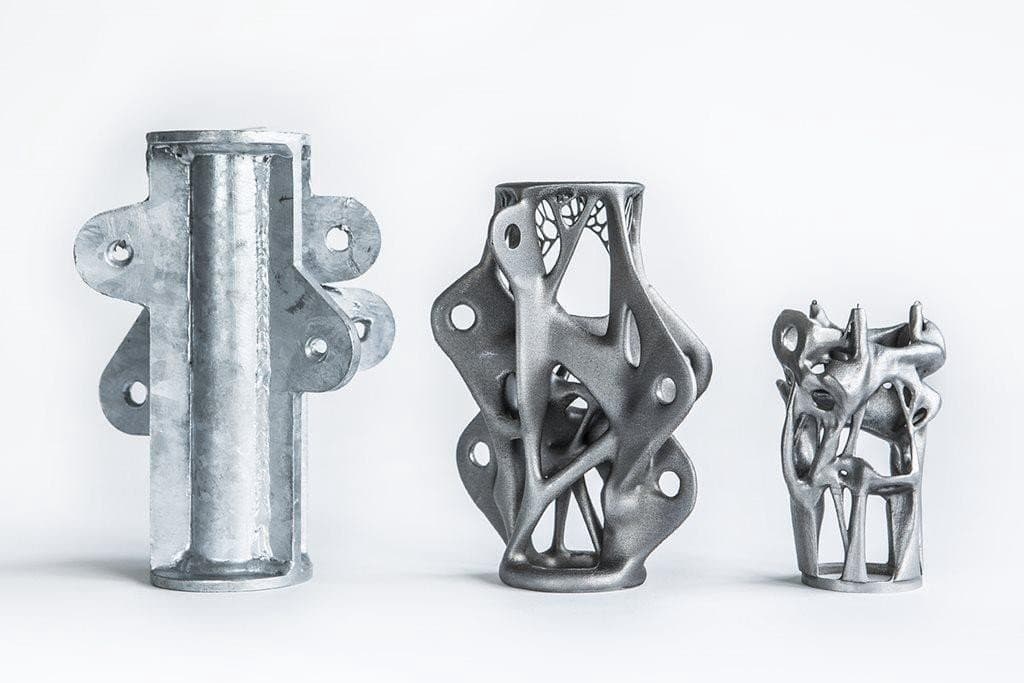
The figure shows an example of a generative design of a cable clamp. Source: https://formlabs.com/eu/blog/generative-design/
The term has also a new meaning. Generative design has become more common in the design of digital solutions. It refers to the use of artificial intelligence to create interactive systems, user experiences and digital content where adaptability and customisation are key. For example, a generatively designed AI-based learning platform adapts its content and interface to the needs of individual learners.
Technology brokering refers to situations where technology or methodologies from one field can be applied to another. What are the transfer opportunities and similarities in generative design between physical and digital solutions?
- Optimisation algorithms: generative design uses optimisation algorithms to maximise materials, structure and functionality. The same optimisation thinking can be applied to the design of digital user interfaces and software.
- Iterative design process: generative design allows rapid iteration and prototyping, in particular through 3D printing. In digital applications, iterative methods are often used, where design and development are continuously improved based on user feedback and analytics.
- User-centred design: generative design can produce products that are tailored to precisely meet user needs and requirements. AI-powered adaptive learning systems are examples of how user-centred design can improve engagement and efficiency. Algorithms analyse user behaviour and adapt the system accordingly.
- AI and machine learning: AI and machine learning can optimise design processes, find the best solutions from large amounts of data, and create innovative products that are better performing and more sustainable. Interactive systems use AI and machine learning to create adaptive and personalised user experiences that improve engagement and user experience.
Generative design combines the power of algorithms and artificial intelligence to create innovative solutions for both physical products and digital systems. In the design of physical products, optimisation algorithms and iterative processes produce efficient and aesthetically pleasing solutions. In digital solutions, user-centric design and artificial intelligence enable adaptive and personalised experiences. From a technology brokering perspective, these two interpretations of generative design offer tremendous opportunities for transferring and combining innovation across different application areas, fostering creativity, efficiency and sustainability.
Pekka Ketola, 2.1.2025
 3d printing renaissance