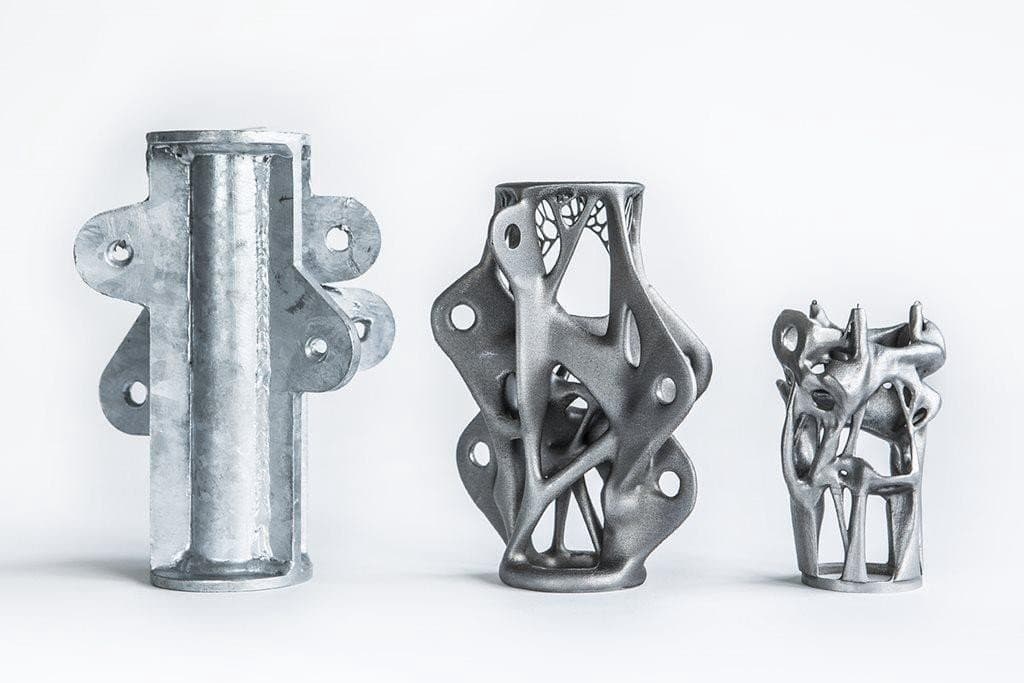
Kustomoinnin tulevaisuus

Digitalisaatio, AI ja 3D-tulostus muuttavat tapaamme valmistaa ja kuluttaa tuotteita. Yrityksille tämä tarkoittaa uutta mahdollisuutta: valmistaa yksilöllisiä tuotteita tehokkaasti. Kuinka pitkälle kustomointia voidaan viedä?
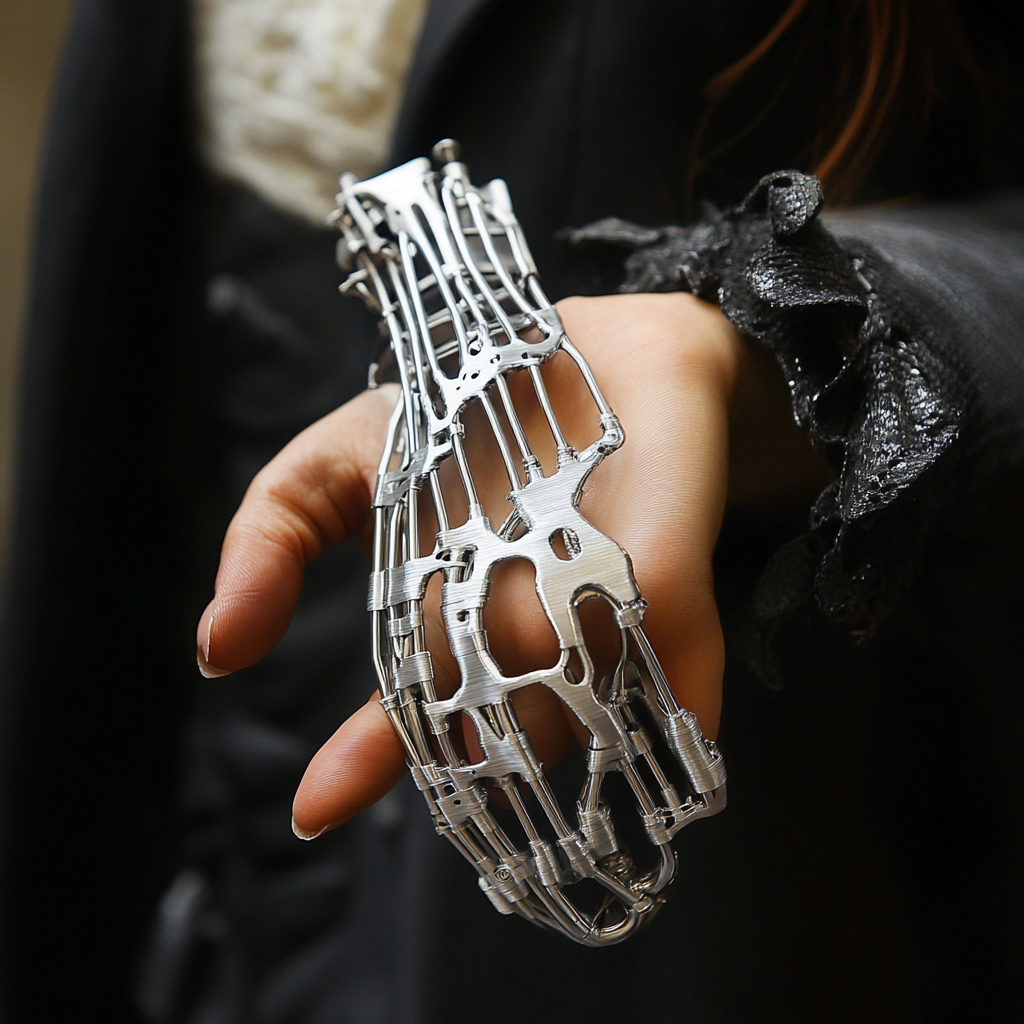
Kustomoinnin tasoja on useita, ja yritykset voivat valita niistä liiketoimintaansa parhaiten sopivan tai yhdistellä erilaisia kustomointimalleja tarjontaansa. Seuraavassa on kustomoinnin viisi päätasoa 3D-tulostuksen näkökulmasta:

  1. Standardoitu massatuotanto on perinteinen tuotantomalli, jossa kaikki tuotteet ovat identtisiä.
    • Kustannustehokas ja skaalautuva, mutta joustamaton asiakastarpeiden suhteen. Massatuotanto ei yleensä sisällä kustomointia. Sen sijaan 3D-tulostus voi mahdollistaa nopeammat prototyypit ja tehokkaamman tuotannon.
  2. Modulaarinen räätälöinti. Modulaarisessa räätälöinnissä asiakas voi valita tuotteen eri osia, mutta itse tuotteen muoto ja perusrakenne ovat ennaltamääritettyjä.
    • 3D-tulostus mahdollistaa joustavien, helposti vaihdettavien moduulien valmistuksen – esimerkiksi erilaisten pidikkeiden, lisäosien tai vaihtokomponenttien valmistamisen nopeasti ja kustannustehokkaasti.
  3. Massaräätälöinti: Tässä mallissa asiakas voi valita tiettyjä ominaisuuksia ennalta määritetyistä vaihtoehdoista.
    • Mahdollistaa suuren volyymin tuotannon, mutta tuo mukaan yksilöllisyyttä. 3D-tulostus tekee massaräätälöinnistä tehokkaampaa, sillä se ei vaadi erillisiä tuotantolinjoja jokaiselle variaatiolle.
  4. Massakustomoinnissa asiakas saa tuotteen, joka on räätälöity hänen tarpeidensa mukaisesti.
    • Tämä voi tarkoittaa esimerkiksi mukautettuja mittoja, ergonomisia muotoja tai yksilöllistä suorituskykyä. Tämä on yksi 3D-tulostuksen suurimmista vahvuuksista, sillä se mahdollistaa täysin yksilöllisten tuotteiden valmistuksen ilman suuria kustannuksia.
    • Esimerkki: 3D-tulostetut yksilölliset ortopediset pohjalliset tai urheilijoille tehdyt räätälöidyt kypärät.
  5. Hyperpersonointi: Tämä on kustomoinnin ääripää, jossa jokainen tuote on ainutlaatuinen ja suunniteltu yksittäiselle asiakkaalle.
    • Yhdistää tuotteen ja käyttäjän tarpeet saumattomasti.
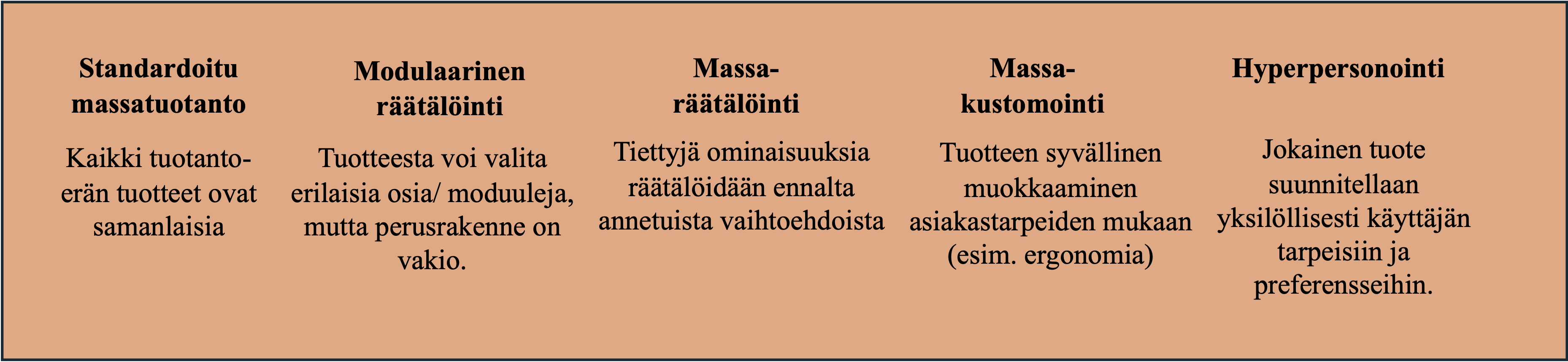
    • Esimerkki: 3D-tulostetut työkalut tai suojavarusteet, jotka on suunniteltu tekoälyn avulla juuri käyttäjän kehon muotoihin ja tyyliin sopiviksi.
    • Tekoäly ja data-analytiikka voivat yhdistyä 3D-tulostukseen luoden tuotteita, jotka kehittyvät ja mukautuvat käyttäjän tarpeiden mukaan.
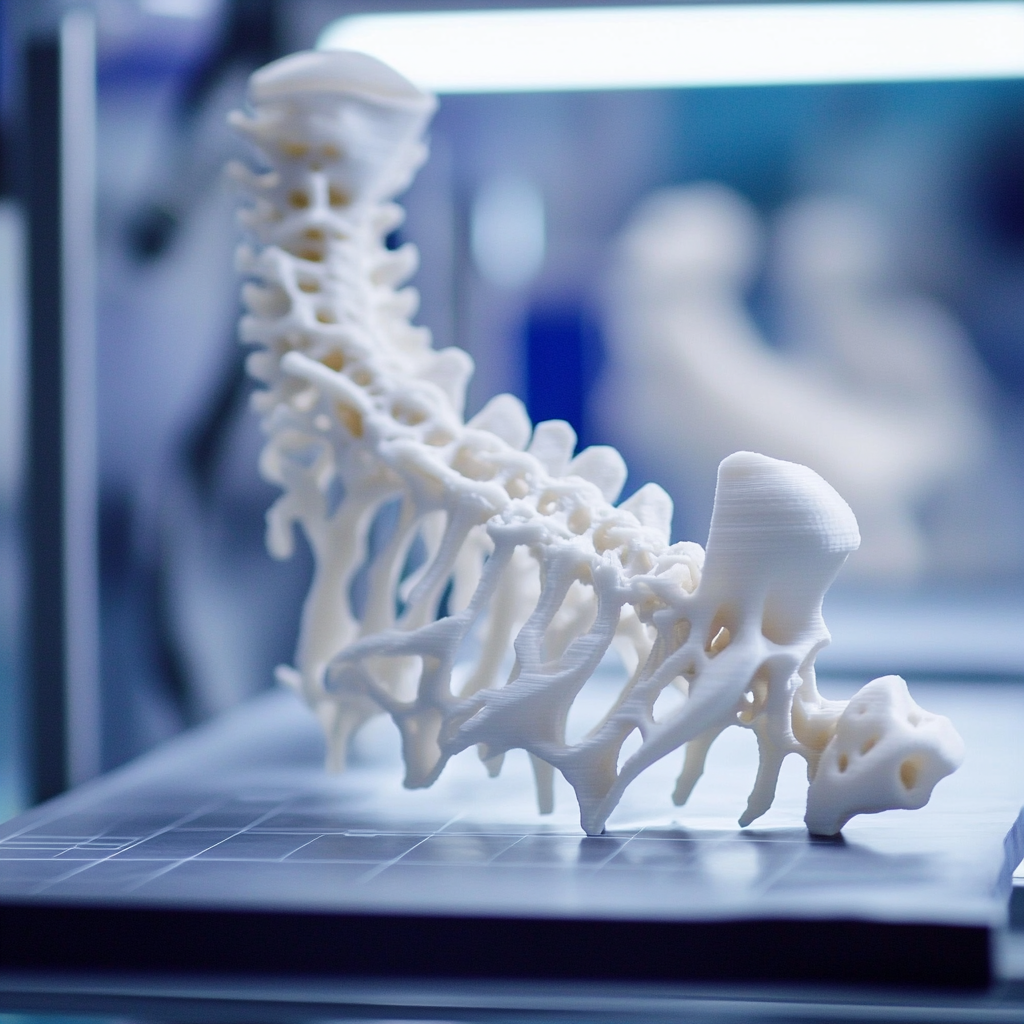
3D Printing in Hospitals – Personalized Care and Better Outcomes

3D printing has numerous promising applications in healthcare, particularly in hospitals. This technology enables more personalized and efficient patient care while improving the quality of medical procedures. Let’s look at the present and the future.

Key Applications:

Anatomical Models:
With 3D printing, patient-specific anatomical models, such as those of the heart, kidneys, or prostate, can be created based on CT or MRI scans. These models help surgeons plan complex surgeries with greater precision, enhancing patient safety. They are also valuable for medical students and patients, as they provide a clearer understanding of diseases and human anatomy.

Patient-Specific Instruments and Implants:
3D printing allows the production of custom surgical instruments and implants tailored to individual patients. This is particularly beneficial when standard-sized devices are unsuitable, such as in gynecological instruments or orthopedic implants. Personalized implants improve fit, comfort, and treatment outcomes.

Surgical Planning and Training:
3D-printed models are instrumental in planning and simulating surgeries. Surgeons can practice complex procedures on these models, reducing errors and shortening operation times. Soft models even allow surgeons to feel the structure of organs, offering a realistic training experience.

Patient Communication:
Doctors can use 3D models to explain a patient’s condition and treatment plan. These models help patients better understand their situation, reducing anxiety and fostering trust in their doctors.

Innovative Medical Devices:
3D printing accelerates the development of new medical devices and prototypes. Bioprinting—printing biological tissues—is a particularly promising field that could enable the production of new tissues and organs in the future.

Education:
Medical students and surgeons benefit from 3D-printed models for learning anatomy and practicing various surgical procedures in a realistic and hands-on way.

Future Outlook

Although 3D printing is not yet a standard practice in hospitals, its potential is immense. As the technology evolves and costs decrease, its use in healthcare is expected to become more widespread. Hospitals can invest in their own 3D printers or collaborate with specialized companies to leverage this innovative technology.

Envisioning the Future: AI, Digital Twins, and Personalized Care

The future of healthcare is set to be transformed by the convergence of 3D printing, AI, and digital twin technologies. AI-powered digital twins are expected to create virtual replicas of patients, organs, or systems. These digital twins will allow doctors to simulate a patient’s unique medical profile, predict disease progression, and tailor precision treatments.

For example, digital twins of the human brain could revolutionize the understanding and treatment of neurological diseases. Meanwhile, AI-driven tools integrated into clinical workflows will enable faster, more accurate diagnostics and treatment plans, taking into account genetic, biological, and environmental factors for truly personalized healthcare.

Advancements in genomics, gene editing, and 3D bioprinting will further enhance these capabilities. The synergy of 3D printing with AI and precision medicine could lead to entirely new approaches in patient care, such as the creation of 3D bioprinted organs customized to match a patient’s genetic makeup.

Remote monitoring and telemedicine are also expected to benefit from these advances. AI-powered wearable devices and 5G networks will allow real-time monitoring and virtual consultations, even analyzing subtle changes in speech patterns or activity levels to detect signs of illness early.

As these innovations evolve, they will work alongside 3D printing to make healthcare more efficient, precise, and accessible, paving the way for groundbreaking medical advancements and better patient outcomes.

Sources:

Generative design – two interpretations

Generative design is a term commonly used in connection with 3D printing, for example. It uses algorithms to generate a wide range of product design options based on predefined constraints and objectives. It is particularly useful in the aerospace industry, where the use of materials, structural integrity and aesthetic appeal are key.

The figure shows an example of a generative design of a cable clamp. Source: https://formlabs.com/eu/blog/generative-design/

The term has also a new meaning. Generative design has become more common in the design of digital solutions. It refers to the use of artificial intelligence to create interactive systems, user experiences and digital content where adaptability and customisation are key. For example, a generatively designed AI-based learning platform adapts its content and interface to the needs of individual learners.

Technology brokering refers to situations where technology or methodologies from one field can be applied to another. What are the transfer opportunities and similarities in generative design between physical and digital solutions?

  • Optimisation algorithms: generative design uses optimisation algorithms to maximise materials, structure and functionality. The same optimisation thinking can be applied to the design of digital user interfaces and software.
  • Iterative design process: generative design allows rapid iteration and prototyping, in particular through 3D printing. In digital applications, iterative methods are often used, where design and development are continuously improved based on user feedback and analytics.
  • User-centred design: generative design can produce products that are tailored to precisely meet user needs and requirements. AI-powered adaptive learning systems are examples of how user-centred design can improve engagement and efficiency. Algorithms analyse user behaviour and adapt the system accordingly.
  • AI and machine learning: AI and machine learning can optimise design processes, find the best solutions from large amounts of data, and create innovative products that are better performing and more sustainable. Interactive systems use AI and machine learning to create adaptive and personalised user experiences that improve engagement and user experience.

Generative design combines the power of algorithms and artificial intelligence to create innovative solutions for both physical products and digital systems. In the design of physical products, optimisation algorithms and iterative processes produce efficient and aesthetically pleasing solutions. In digital solutions, user-centric design and artificial intelligence enable adaptive and personalised experiences. From a technology brokering perspective, these two interpretations of generative design offer tremendous opportunities for transferring and combining innovation across different application areas, fostering creativity, efficiency and sustainability.

Pekka Ketola, 2.1.2025